
The gate to the south
The South is the most visited region in Madagascar. Almost forty percent of the tourists who come to the country spend their stays in the South. The road has been improved. Isalo is one of the most attractive places in the deep South, since it receives 20,000 tourists a year. The majority of the country’s national parks are in the Southern region, namely Ranomafana National Park, Isalo National Park, Berenty Reserve, etc.
The circuit to the deep South provides an excellent panoramic view of the beautiful landscape of the Highlands with the spectacular drop in altitude of the South. In Isalo, there is the Grand Canyon and the famous Isalo Window to watch the sunset; the natural swimming pool provides an unimaginable exotic place where tourists spend their relaxing day in the water, after a long walk.
Fianarantsoa
The name of the city means, the “city where good is taught“, which turned out to be a civilizing mission of the Betsileo people to honesty. Four hundred kilometers from the capital by road, towards the south of the island, Fianarantsoa was built in 1830. It was built on a set of small hills and has a small lake. It is the capital of the Betsileo ethnic group. The trip takes 8 hours by car from Tana. The region is known for its tea and wine cultures. The Sahambavy tea plantation is located in a very pretty valley near Lake Sahambavy, 25 kilometers from Fianarantsoa along the railway to Manakara. Fianarantsoa is also famous for its wineries (Soavita, Lazan’ny Betsileo), on the way to Ambalavao. A good number of churches exist in the city, due to the influences of Catholic and Norwegian missionaries between 1860 and 1870. Fianarantsoa consists of three different levels including the old town or upper town, the modern middle town and the lower town. Tolon’Omby (or Savika) is the famous sport practiced by the Betsileo during important events such as circumcision, big festival, holidays, etc.… Savika is practiced by young Betsileo men fighting zebus with their bare hands.
This version ensures that key SEO keywords are highlighted appropriately without losing the essential information about Fianarantsoa and its cultural significance.
Hotels:Ambositra
Ambositra, located 90 kilometers south of Antsirabe, is renowned as the capital of craftsmanship in Madagascar. This town is famous for Zafimaniry art, which includes sculpture, marquetry, and woodcuts. The art of Zafimaniry has been classified as world heritage by UNESCO since November 2003, making the villages of the Zafimaniry internationally celebrated. In addition to woodcraft, locals also produce items from raffia and various other materials. Visitors to Ambositra can explore a wide array of cutout figures and marquetry in several shops. Notably, the most esteemed craft shop, known as Jean et Frères, can be found opposite the Grand Hotel at Chez Victor.
HotelsRanomafana National Park
Ranomafana National Park, a sprawling 41,601 ha primary forest, was designated a World Natural Heritage site in 2007 as part of the Atsinanana. This park boasts endemic biodiversity under threat, including rare and critically endangered lemur species. It serves as a genetic reservoir for unique plant species. Located 70 kilometers east of Fianarantsoa, Ranomafana is renowned for its hot springs and curative mineral baths. The park teems with rare lemurs like the greater bamboo lemur, Diadem sifaka, red lemur, white-fronted lemur, woolly Avahi, pygmy mouse lemur, aye-aye, golden bamboo lemur, Sifaka of Milne-Edwards, and crowned lemur. Explore the park’s numerous Namorona river waterfalls, reputedly the largest in Madagascar, and its dense forests that harbor elusive birds such as the Henst’s hawk, rare frogs, and chameleons.
Plan your unforgettable adventure with Ortour Madagascar today!
HotelsManakara & Mananjary
Manakara, located in the southeastern region of Madagascar, is known for its Antemoro ethnic group. It stands as one of the region’s key cities.
Manakara is accessible via train or car, offering convenient travel options.
In contrast, Mananjary is the ancestral home of the Antembahoka ethnic group, originating from Arab roots. While Mananjary is still developing its tourism sector, it boasts abundant crops such as coffee, pepper, and cloves, vital exports for the country.
Exploring the Pangalanes canal by canoe or boat is a major attraction, providing a scenic route to Tamatave. Local traditions include the Sambatra, a significant collective circumcision ceremony held once every seven years for boys under ten.
The southeastern region mirrors the East Coast in both landscape and vegetation. Understanding and respecting the customs and traditions of these areas is crucial. In Mananjary, for example, cultural norms dictate that twins cannot be raised under the same roof. One must be cared for by others or face dire consequences.
HôtelsManakara
Mananjary
Vohipeno
Vohipeno, situated approximately 45 kilometers south of Manakara, holds a unique historical significance as the capital of the Antemoro kingdom, originating from Arab roots. This town dates back about 600 years and was instrumental in preserving the Arabic script known as SORABE. This script played a pivotal role in tracing the historical migration of ethnic groups across Madagascar.
A highlight of your visit should include meeting the local king at the sacred site known as Tranobe. While Vohipeno lacks suitable accommodations, Ortour Madagascar recommends staying in nearby Manakara.
Ambalavao
Located 56 kilometers south of Fianarantsoa, Ambalavao is an hour’s drive away, often referred to as ‘the passage to the deep south’. This charming town is renowned for its Antemoro paper, a unique type of paper infused with dried flowers, widely sold across Madagascar.
Antemoro paper is traditionally crafted from the bark of the Eastern Forest avoha tree, though sisal pulp is now commonly used. The process involves pounding the bark and soaking it in water, then spreading it over trays to dry under the sun.
A visit to see the Antemoro Paper making process is highly recommended, offering a fascinating glimpse into Madagascar’s rich cultural heritage and artisanal craftsmanship.
Anja Parc
Anja Park is a small reserve spanning a few dozen hectares, situated 12 km south of Ambalavao village in Madagascar. Anja is renowned for hosting the northernmost population of the ring-tailed lemur, Madagascar’s most iconic lemur species.
Lemurs thrive in the forest at the base of the 3 Sisters massif, featuring peaks like Amboalady, Andrarambola, and Iandrambaky, rising up to 1475 m. Sunrise over the high plateaus is particularly breathtaking. Anja Park is also known for its traditional brick-making process.
Encounters with lemurs occur in their rocky habitat, nestled among steep granite boulders. The ring-tailed lemur is highly adapted to open environments.
The park is home to various lemur species, including the Eulemur rufus (red-fronted lemur). Madagascar hosts around 75 lemur species, categorized into nocturnal and diurnal groups. Red-fronted lemurs typically live in groups dominated by a female, numbering around fifteen individuals.
Male red-fronted lemurs are distinguished by their light gray color, black muzzle, and rufous forehead, while females have browner fur and gray heads. Their diet primarily consists of fruits.
Anja also boasts the largest chameleon species, Furcifer oustaleti, reaching up to 60 cm. Contrary to popular belief, chameleons change color based on mood rather than their surroundings.
The island’s endemic Madagascar spider (Nephila madagascariensis) is a significant silk producer, spinning approximately 65 km of silk per month. It’s recognizable by its black and white ringed pattern and can grow up to 1m in length (including tail), feeding on fruits and flowers, occasionally insects and small vertebrates.
Anja offers a unique arid environment for these creatures, with rocky outcrops providing safe haven in caves for groups of around twenty individuals.
Ring-tailed lemurs face threats from various predators including the Fosa (Cryptoprocta ferox), Madagascar’s largest carnivore, along with birds of prey, snakes, and stray dogs.
Female lemurs typically give birth to a single calf annually, which clings to its mother’s back for weeks. Sadly, juvenile mortality rates are high, with only about 50% surviving past one year.
The park tour culminates in the discovery of Catta‘s bedroom, natural cavities adorned with the roots of ancient ficus trees. Nearby, tombs in small caves highlight the significance of ancestor worship among Malagasy people. These sacred burial sites are among the many fady (taboo) places in Madagascar.
Andringitra
Andringitra National Park is located 47 km south of Ambalavao along National Road No. 7, in the Haute Matsiatra region of Madagascar. The park covers 31,160 hectares and ranges in altitude from 650 to 2658 meters.
Known for its endemism and biodiversity, Andringitra’s natural wealth is preserved by its slope layout and rocky massifs. The park hosts a diverse array of wildlife, including seven (7) species of crustaceans, 190 species of insects (including aquatic species), 78 species of amphibians, 50 species of reptiles, 54 species of mammals (such as lemurs, carnivores, bats, and micromammals), and 108 species of birds.
Ranohira & Isalo National Park
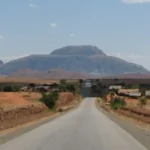
Located south of Fianarantsoa and 80 km from Ihosy, Isalo National Park is a continental sandstone plateau dating from the Jurassic, covering 81,540 ha. This ruiniform massif is criss-crossed by rivers and canyons, offering a spectacular and exceptional landscape.
The park is home to typical animals reflecting its unique climate, vegetation, and geomorphology, with 77 species of birds including the endemic Benson blackbird (Pseudocosyphus bensoni), and 14 species of diurnal and nocturnal lemurs, 7 of which are endemic to Madagascar. Isalo also boasts over 400 plant species, many of which are Madagascar-endemic such as Pachypodium rosulatum and Catharantus ovalis.
The savannah of Isalo features resilient palm trees like the Bismarkia nobilis, locally known as “Satrana”, known for its fire-resistant properties.
Hotels :

Zombitse & Vohibasia National Park
Zombitse Vohibasia Forest Complex comprises Zombitse Forest and the biological sites of Vohibasia and Isoky. Protected area spans 36,308 hectares, divided into three sections: Zombitse (16,845 ha), Isoky Vohimena (3,293 ha), and Vohibasia (16,170 ha). Madagascar endemic birds thrive here, representing 47% of the country’s species, including the local endemic species Bernieria apperti. The forest is also home to eight species of lemurs, with some, like the Phaner furcifer pallescens, nearing threatened status. Highlight of Zombitse Vohibasia fauna: Berneria appertii or Ritrik’ala, an endemic bird found throughout the Ritikala Circuit.
Tuléar
From Tana to Tuléar, you have 950km to cover. Tuléar is the capital of the southwestern region of Madagascar. There are five different ethnic groups in this last destination of the RN7: the Vezo known as great fishermen, the Mahafaly, the Antandroy (people of the thorny forest), the Bara, and the Antanosy (people of the ‘Isle).
The climate is very dry and hot with spiny forests in Ifaty. Tuléar attracts many tourists due to its natural resources and having a rich marine life with excellent snorkelling and diving, the tombs of Mahafaly and Masikoro, and a museum that put it in a remarkable context, the famous bush of the north and the south of the city. The beaches have fine fine sand and a brilliant coral reef that serve the Vezo fishing men, masters of colorful canoes, a lot. The island’s coral reefs are mostly off the western coast of Madagascar. There are many wonderful and colorful fish, whales, sharks, dolphins, ray turtles and incredibly rare fish. Coelacanths were caught in the region of Saint Augustin, south of Tuléar.
Traditionally, having the zebu is a sign of wealth on the southwestern coast of Madagascar; the zebu is considered a sacred animal. Their main activity is based on cattle breeding. The zebu has great value for these people. Zebus are killed during ceremonies such as burial, the funeral ceremony, the main festival. The horns of the zebu are put on the wall of the tomb to symbolize the wealth of the dead person. A good number of images are engraved. They symbolize his wealth.
HotelsIFATY (the beach in the north of Tuléar)
Ifaty is 27km north of Tulear; the road is not very well maintained. It has beautiful fine sand beaches and provides water activities and whale watching.
LA RESERVE RENIALA is a reserve located near the sea, in the Baobab forest of South-West MADAGASCAR, at the exit of the village of Mangily which is 27 km from Tuléar. The reserve covers an area of 60 hectares.
This area has an exceptional flora and fauna richness with more than 1000 endemic plant species with remarkable xerophytic adaptations (to the dry climate), many endemic birds including Uratelornis and Monias, reptiles, turtles: Astrochelys, Pyxis, lizards, snakes, and mouse lemurs.
We have 11 salaried Malagasy employees: two guides for the botanical trail, two guides for the birds, two gardeners, two caretakers, a person in charge of reception and ticket sales, a person in charge of the maintenance of the natural fence, an environmental manager.
Open to the public since December 2000, Reniala brings together under the same name a botanical trail and an ornithological reserve.
We wish to inform as many people as possible of the biological wealth of this region and participate in the sustainable development of the region through the jobs created.
It is a place that has many endemic species of birds such as Long-tailed Coua, Runner Coua, Crested Coua, Striped Polyboroid, Chabert’s Artamia, Lafresnaye’s Artamia, Falculia mantled, the Mesite of the Sub-desert, etc.
HotelsAnakao (beach in the south of Tuléar)
The Tropic of Capricorn crosses Anakao, a charming village of the Vezo people in Madagascar known for its fishing activities and vibrant beach scene. The village stands out with its picturesque colorful canoes resting on the shore. Anakao boasts a protected marine park where visitors can marvel at various fish species within the coral reefs, including humpback whales that migrate through the area from July to September. Located 250km from Toliara, Anakao is reachable by a secondary road, though most tourists prefer the Vezo safari or a motorized boat journey taking approximately three hours, depending on the boat’s engine power.
HotelsSaint Augustin
The village of Saint Augustin is traditionally inhabited by fishermen from the Vezo tribe. Saint Augustin was built on the edge of a beautiful bay.
The cave and the village of Sarodrano
The Sarodrano Cave is located south of the Mangrove Hotel, just 4 kilometers from the peninsula. Here, you can explore incredible dramatic sand dunes, surrounded by trees and pools, and discover caves where you might encounter the Maki Catta and endemic birds of the southern island.
HotelsBetioky
Betioky is half a day by 4WD from Tuléar. In Betioky, the best hotel is Chez Claudia, 1 km before the town, with a family room and a good kitchen.
Ampanihy
Ampanihy is the producer of the famous handmade mohair rug. The name of the city, “the refuge of bats”, holds historical significance. Visiting Ampanihy is highly recommended to explore the carpet factory and witness the largest baobab in Madagascar.
Where to stay?
Lac Tsimanampetsotse
Tsimanampetsotse National Park covers 43,200 ha. Lake Tsimanampetsotse, the first RAMSAR site in Madagascar, is classified under the International Convention on Wetlands. It is the only protected area on the limestone plateau and the coastal zone along the Southwest coast. Tsimanampetsotse boasts 112 bird species, including 5 species of Coua out of the nine existing, diverse herpetofauna with 39 reptile species, and 3 lemur species, including 2 diurnal (Lemur catta and Pr), and 2 nocturnal (Microcebus griseorufus and Lepilemur). The park hosts 185 plant species, including Opithecus verreauxii verreauxii.
Beheloka
Beheloka is located about 35 kilometers from Anakao. Beheloka Bay has beautiful beaches.
HotelsItampolo
Itampolo is about 150 kilometers south of Toliara. It is very famous for its beautiful beaches with colored pinkish sand; it is also a good place to surf.
HotelsFaux Cap
Faux Cap is found deep in the southwestern region of Madagascar. Faux Cap is a small, secluded community with a beautiful beach and coral reef.
HotelsAndohahela National Park
Andohahela National Park, located in the Androy region, halfway between the districts of Taolagnaro and Amboasary-Sud on National Road No. 13, covers 76,020 ha at altitudes ranging from 120 to 1,972 meters. The landscape, fauna, and flora showcase astonishing variety in Andohahela due to its blend of species from the South and the East. Like many national parks in Madagascar, Andohahela boasts a high rate of endemism.
Among its notable inhabitants are 12 species of lemurs, including 5 dry forest lemurs. The park also supports 129 species of birds, 75 species of reptiles, and 50 species of amphibians, with four adapted to dry forest conditions. Lemurs are a prime attraction for tourists, with the Maki or Lemur catta particularly popular. Recognizable by their gray bodies with a distinctive ringed tail of white and black, these lemurs, standing at approximately 50 cm tall, are often spotted in Ihazofotsy.
Andohahela’s biodiversity extends to its plant life, boasting over a thousand plant species, including six of the eleven endemic Didieraceae species found in the South. The park also hosts 207 species and varieties of ferns, predominantly thriving in the humid forest areas. Notably, endemic palm species flourish in Andohahela and its environs, such as the Dypsis decaryi or trihedral palm, which is the most endemic palm species in the region.
This unique blend of wildlife and flora makes Andohahela National Park a captivating destination for nature enthusiasts and eco-tourists seeking an authentic Madagascarn wilderness experience.
Taolagnaro / Fort-Dauphin
Taolagnaro (also known as Fort-Dauphin) is located at the bottom of the southeast coast of Madagascar. The town of Taolagnaro is nestled between dramatic mountains and the Southern Ocean, with a couple of ethnic groups such as the Antandroy and the Antanosy. Antanosy is the dominant ethnic group in the region.
The climate of Taolagnaro is composed of the Eastern climate, which is rainy, and the Southern climate, which is hot and dry.
Taolagnaro has beautiful beaches like the famous Libanon beach
Berenty Nature Reserve
The Berenty nature reserve is located 86 km west of Fort Dauphin, covering an area of 250 ha. The road to Berenty offers a glimpse into the unique landscapes of Anosy, featuring lush vegetation, carnivorous plants like “Nepenthes”, and local agriculture including cassava, sugar cane, and rice fields. Take a moment to explore the villages of Anosy along the way.
Established in 1936 by the Deaulme family, Berenty protects the forest animals within a gallery of century-old tamarind trees along the Mandrare River. The reserve also encompasses the characteristic southern Malagasy “thicket”. Over time, lemurs in the area have become habituated to human presence, allowing for remarkable observation opportunities. Notable lemur species include Sifaka, Maki (diurnal), Tsidy, and Sonygika (nocturnal). October is particularly ideal for spotting baby lemurs. Other species found here include brown lemurs, white-fronted lemurs, Verreaux Sifakas, white-legged lemurs, and mouse lemurs.
Berenty is renowned for its birdlife, with approximately 100 recorded species including the giant Coua and the flayer Vanga. From mid-October to late December, the reserve hosts migratory birds from Southeast Africa such as the Malagasy Roller, the Madagascan Cuckoo, and various waders like Redshanks, Greenshanks, Sanderlings, and Plovers. The area also supports a diverse population of reptiles, chameleons, and crocodiles.
Hotels


